Amazon Bulk Liquidation: The Ultimate Guide to Buying Pallets for Resale

Buying Pallets for Resale in 2026
Table of Contents
- Buying Pallets for Resale in 2026
- What Is Amazon Bulk Liquidation?
- Why Should You Invest in Liquidation Pallets?
- What Condition Will the Items Actually Be In?
- Best Practices for Buying Amazon Bulk Liquidation Pallets
- Final Thoughts: Start Sourcing Smarter
- FAQ Section
- Q: What’s the difference between Amazon’s official Bulk Liquidations Store and buying from a third-party liquidation site like this one?
- Q: How much can I realistically expect to pay for an Amazon liquidation pallet?
- Q: Will every item in a liquidation pallet actually be sellable?
Finding a reliable source of high-quality inventory is the biggest challenge for e-commerce sellers, flea market vendors, and discount store owners. If you want to scale your inventory without breaking the bank, Amazon bulk liquidation is one of the most profitable sourcing strategies available today.
Every year, millions of items are returned to Amazon or left sitting unsold in fulfillment centers as overstock. To clear out warehouse space, Amazon liquidates these goods in massive quantities. That creates a real opportunity for entrepreneurs to buy name-brand inventory for a fraction of retail price.
In this guide, we’ll break down exactly how the liquidation process works, what’s actually inside these pallets, and how you can buy them safely to grow your business. If you’d rather skip straight to live inventory, browse our Amazon Pallet category now.
What Is Amazon Bulk Liquidation?
When a customer returns an item to Amazon, or a third-party seller has excess inventory that isn’t selling, keeping that stock in an Amazon warehouse gets expensive fast. Amazon’s own aged inventory surcharge kicks in once stock sits for 181+ days, with the fees increasing again at the 12-month and 15-month marks so rather than absorb those costs indefinitely, sellers liquidate.
Through Amazon bulk liquidation, these items get bundled into massive lots or pallets and sold off to liquidation platforms and resellers. Amazon actually runs its own version of this directly the Amazon Bulk Liquidations Store which sells palletized lots composed of either unopened overstock or customer-returned/damaged items, sourced from Amazon’s own inventory or aggregated from third-party sellers. (Worth knowing if you ever compare prices: that program sells “as is,” with all sales final.)
These pallets generally fall into a few categories:
- Customer Returns: Items sent back by buyers. These range from brand-new, unopened products to items that are damaged or missing parts.
- Overstock / Shelf Pulls: Brand-new merchandise that never sold. Usually in perfect condition and ready for immediate resale.
- Closeouts: Discontinued items or seasonal inventory a seller needs to move quickly.
Why Should You Invest in Liquidation Pallets?
The math behind reselling liquidation inventory is simple: low acquisition cost equals higher profit margin. Here’s why sourcing from bulk lots is a genuine opportunity for resellers right now.
1. Incredibly Low Sourcing Costs
Pricing varies a lot depending on where you source from and what condition the lot is in. Industry pricing data puts brand-new/overstock pallets at roughly 70–90% of retail value, while mixed customer-return pallets typically run 40–70% of retail — and some bulk truckload deals go even lower, in the 5–10% of MSRP range, when bought direct from large-scale liquidators. The wide range is exactly why reading a manifest properly (more on that below) matters more than the headline discount.
2. Diverse Product Variety
Amazon sells everything from electronics and cosmetics to home goods and apparel. A single liquidation lot gives you instant access to a diverse product mix, letting you test different niches without committing thousands of dollars to one supplier or category. Our Electronic Pallets and Fashion Pallet Liquidation categories are a good place to see that variety firsthand.
3. A More Sustainable Business Model
Buying liquidated inventory keeps perfectly good products out of landfills. By sorting, testing, and reselling these items, you’re participating in the circular economy Amazon itself has publicly committed to the company has explicitly framed programs like FBA Liquidations as part of its sustainability strategy, aiming to give returned and unsold inventory a second life rather than scrapping it.
What Condition Will the Items Actually Be In?
This is one of the most common questions first-time buyers ask, and the honest answer is: it depends on the lot type, but expect a mix.
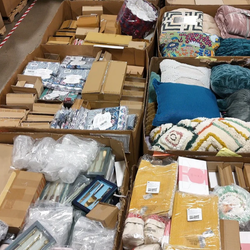
If you’re buying raw, unmanifested customer-return pallets, a widely used rule of thumb in the industry is the “three-way split”:
- About one-third will be brand new or ready to resell immediately
- About one-third will need cleaning, minor repairs, or repackaging
- About one-third may be unsellable or only useful for parts
Manifested overstock and shelf-pull pallets perform much better than this since the merchandise was never actually used, sellable rates of 80–95% are common. That’s the core trade-off in this business: manifested, graded lots cost more per unit but carry far less risk than blind, unmanifested pallets.
Best Practices for Buying Amazon Bulk Liquidation Pallets
The profit potential is real, but buying liquidation inventory carries risk especially with blind customer-return pallets. Follow these practices to protect your investment.
Review the Manifest Carefully
A manifest is a detailed spreadsheet listing every item on a pallet, including its retail value and description. Buy manifested pallets whenever possible this lets you research resale value before you commit. Never buy a fully blind, unmanifested lot unless the price already reflects that added risk.
Account for Shipping and Hidden Costs
Liquidation pallets are heavy and bulky, and freight can add a surprising amount to your total cost. Always calculate your full landed cost before bidding pallet price, plus any buyer’s premium, plus shipping, plus local delivery or liftgate fees. A “cheap” pallet on paper can turn expensive fast once freight lands.
Expect a Mix of Conditions and Price Accordingly
As covered above, raw customer returns won’t all be perfect. Build your maximum bid around the realistic sellable percentage for the lot type you’re buying, not the full manifest value.
Don’t Confuse Manifest Value With Resale Value
Manifest values are typically based on original MSRP, which is often inflated relative to what items actually sell for secondhand. Cross-check a sample of high-value items against real sold listings (not just current asking prices) on platforms like eBay before you finalize your budget.
Final Thoughts: Start Sourcing Smarter
Amazon bulk liquidation offers a genuinely strong path to building inventory for resellers whether you’re running a side hustle on eBay and Poshmark or stocking a full discount storefront. The sellers who do well treat it as a numbers game: read the manifest, calculate the full landed cost, and price in the realistic condition mix before you ever place a bid.
Ready to find your first profitable lot? Explore our latest wholesale arrivals, check out full Truckload deals for bulk buyers, or browse Apple Products Pallet Liquidation for higher-ticket electronics lots — auction schedules update regularly at Liquidation Pallets Auctions.
FAQ Section
Q: What’s the difference between Amazon’s official Bulk Liquidations Store and buying from a third-party liquidation site like this one?
Amazon’s own Bulk Liquidations Store is a closed-beta program limited to enrolled buyers in the contiguous US, requires Amazon Tax Exemption Program enrollment, and sells lots at fixed prices with all sales final and no returns. Third-party liquidation marketplaces and auction sites, like ours, typically offer broader access, detailed manifests for easier evaluation, and more flexibility in lot size, category, and shipping without the enrollment barrier.
Q: How much can I realistically expect to pay for an Amazon liquidation pallet?
It depends heavily on condition. Brand-new overstock and shelf-pull pallets generally run 70–90% of retail value, mixed customer-return pallets run roughly 40–70%, and bulk truckload deals sourced directly from large liquidators can go as low as 5–10% of MSRP. Always compare the asking price against a manifest, not just the advertised discount.
Q: Will every item in a liquidation pallet actually be sellable?
No and any seller who claims otherwise should raise a red flag. For raw, unmanifested customer-return pallets, the realistic expectation is the “three-way split”: roughly a third ready to sell, a third needing light repair or repackaging, and a third unsellable or parts-only. Manifested overstock pallets perform far better, often in the 80–95% sellable range, since the merchandise was never used.
Posts Widget
-
1

-
2

-
3

-
4

Copyright 2026 ©Liquidation Pallets Auctions. All right reserved.
